This is my vodcast, in which I am commenting on narrative of different horrorgenres.
"In this vodcast I will be covering some of the key aspects of narrative and analyse, which of my 5 genre specific movies they can be applied too.
As you can see on my blog, there are four key theories in media. Propp's character archetypes, Todorov's narrative formula, Strauss' concept of binary oppositions and Barthes concept of the narrative enigma. Barthes concept of the narrative enigma can be applied to the movie "Insidious". In this film, there is both an enigma code and an action code.
The enigma code is there, since the lighting and the darkness in the boy's room at the beginning of the film refers to mystery and makes the audience want to know more about the boy and that particular house. The action code, on the other hand, is there, because there are elements of action due to the sudden non-diegetic thriller music, but also the sudden appearance of a ghost or mystical human being with a candle lit in front of him/her.
A good example of a movie that Todorov's narrative formula can be applied to, is "The Cabin in the Woods". In this movie, we are introduced to the main character's on a bright and sunny day. The friends are laughing with each other and due to this, the audience can state that there is an equilibrium, showing us that all is well. In most horror films, there is always an equilibrium and after a short period of time, there is a disruption of the equilibrium. However, we also know that it rarely happens that a horror movie ends well and therefore there is often no reinstatement of the equilibrium.
You can also apply Todorov's narrative formula to the movie "Poltergeist". For this movie, there is also established an equilibrium immediately, since the first main character's we meet are driving around in their car looking for their new house that they are about to move into.
Strauss' concept of binary oppositions, can be applied to the film "The Cabin in the Woods". In this film, all is well and good in the opening scene. However, all of a sudden, the title of the movie appears on screen in a big red font with a non-diegetic music. So in this case, there is a binary opposition, since the first minute we are introduced to the main characters and everything is well and the next minute the audience is being warned that something is about to happen because of this big red title.
Director:Jim Sheridan
Writers:David Loucka
Actors:Daniel Craig, Rachel Weisz, Naomi Watts
Production Companies:Cliffjack Motion Pictures, Morgan Creek Productions, Universal Pictures
Budget:$55.000.000 (estimated)
Genre:Mystery, Drama, Thriller
Storyline:
Some say that all houses have memories. For one man, his home is the place he would kill to forget. A family unknowingly moves into a homes where several grisly murders were committed… only to find themselves the killer's next target.
Titles:
When the very first ident of Universal pictures opens, there is a non-diegetic sound of a little girl humming a song in the background. At one point there are added very slow bells to it, which come across as a very mystical sound.
As the ident of the Morgan Creek Productions comes up, the non-diegetic sound of the voice, bells and this time also flutes continues. The bells could also suggest that it is Christmas.
When the title of the movie 'Dream House' appears on screen with a black background it is a very neutral and white font.
After this small opening sequence, the audience sees a low angle shot of a tall building while it is snowing from the outside.
We are introduced to one of the main characters, while there is a magical non-diegetic sound appearing when we first see this character. We follow some of their dialogues and come to notice that he is quitting his job to be able to write a book.
In addition, we then see a close-up of a book lying on the table with drawings and notes in it. On the front, you notice that it says 'Daddy's Dream House'. This could imply that the font from the title of the film has been chosen on purpose, since it could represent the titles of a book cover.
What is interesting to notice, is that there is no 'real' opening sequence besides from the identsappearing with the non-diegetic music and the title of the film. This means that it was chosen to put the credits at the end of the movie in stead of the beginning, which is very unusual. One reason for this could be because they want the audience to notice every hint being dropped that could show the genre of the movie.
Semiotics:
In the case for this film we can't really make any comments on the font, since there is no font to see except for the one that is in the title. As mentioned before, the title of the film could have been a font chosen on purpose to represent the book covers since the audience finds out that the main character wants to write a book.
In addition, we could interpret, that the low angle shot in the beginning of the film is a sign of showing the audience that the main character is in a high position. We later on find out that he is or has been an editor and that he will be missed by his co-workers, since they drink champagne before he leaves to wish him well.
Moreover, the close-up of his book that says: 'Daddy's Dream House', is a signifier that he could have children.
For the symbolic level, we know that the non-diegetic magical music being played, when we are introduced to the character, symbolizes the piece and happiness in his life.
Moreover, snow and the magical sound at the same time are very often interpreted as either Christmas time or just a cold time of year.
Narrative exposition:
In this opening sequence, we can apply Todorov's theory, since there is firstly established an equilibrium. This is established, when we see the first main character and there is a magical non-diegetic sound appearing. Due to this, we know for a fact that all is well and nothing is going to happen yet.
Actors: Patrick Wilson, Vera Farmiga, Ron Livingston
Production Companies: The Safran Company, New Line Cinema, Evergreen Media Group
Budget: $20.000.000 (estimated)
Genre: Horror
Storyline:
In 1971, Carolyn and Roger Perron move their family into a farm house and soon strange things start happening around it with escalating terror. In desperation, Carolyn contacts paranormal investigators to examine the house. What they discover is a satanic haunting that is targeting the Perron family wherever they go.
Titles:
From the beginning on, when the idents of Warner bros appear, the audience are immediately introduced to the genre. Usually the Warner Bros ident is golden with a blue sky in the background. However, in this film, it comes up with thunder and black clouds in the background. So in this movie, the idents are essential, since they are the ones creating a tension within the audience.
The new line cinema logo appears in the exact same way and has the same influence on the audience as the Warner Bros. ident.
While these idents are presented to the audience, there is a non-diegetic music of drums and trumpets. This non-diegetic music is also underlining the scarifying genre.
In the opening sequence of the movie, which lasts about two minutes, there are no titles or opening credits appearing on screen. The audience is immediately shown an extreme close-up of a blood covered, old doll. The blood and the wide open eyes, suggest that something isn't right and also emphasise on the genre.
Semiotics:
The coloring used for the introduction of the idents, suggest that the genre is going to be horror or thriller. Very often in these specific genre films, the colors grey, red and black are used. The reason for this is because, red could be used to emphasise that blood will be spilt, whereas black and grey are very dark colors that create a dim and gloomy setting with the help of lighting as well.
In the opening sequence of this film, there aren't many symbols that represent the genre of the movie except for the doll. In many horror movies, an old doll, with wide eyes and blood on it's face is used as a symbol for horror. However in this film, we know that the focus will probably be on the doll, since it is the first shot we see.
There are a few seconds after the idents have appeared where the screen is black and we hear a voice-over of a woman saying:"You will think I am crazy" where upon a male voice-over replies and says:"Tell me everything." We are then introduced to an extreme close-up of a dolls face, and immediately know that something is not right since it's eyes are wide open and it is covered in dirt and blood.
The mise-en-scene of the doll is very scary and this as well is something emphasising on the genre of the movie.
After the male voice-over has said: "Tell me everything.", we are being told the story of the doll by the woman who says that it had been possessed by a girl named Annabelle. All of this, she is telling two people who sit in front of her and her two friends, which are questioning all three of them out about the doll. Due to this, we could interpret that the two people might be police officers or people investigating on the case.
We are then taken back in time, where the entire story is explained to the audience.
Narrative exposition:
The only theory that can be applied to this movie is Barthes concept of the Narrative Enigma. For example, there is an enigma code, since there are clues being dropped about the doll and what the film will be about.
Writers: David Lindsay-Abaire, Steven Spielberg, Michael Grais, Mark Victor
Actors: Rosemarie DeWitt, Kennedi Clements, Sam Rockwell
Production Companies: Fox 2000 Pictures, Metro-Goldwyn-Mayer, Ghost House Pictures,
Vertigo Entertainment, TSG Entertainment Budget: $35.000.000 (estimated)
Genre: Horror, Thriller
Storyline:
A family whose suburban home is invaded by angry spirits. When the terrifying apparitions escalate their attacks and takes their youngest daughter, the family must come together to rescue her.
Titles:
In this movie, the idents of Fox 2000 Pictures, Metro Goldwyn Mayer and Ghost House Pictures come up as normal and there hasn't been a change of coloring or anything else to emphasise on the genre.
All of a sudden, there is a multicolored pattern on the entire screen, that comes across as futuristic and sci-fi genre. It is moving in an odd way, which suggests mystery and somewhat a ghostly aspect to the movie.
The titles of the production company appear on this in a white font.
After this, there are no titles or credits, and we are immediately introduced to the main character's and the entire family.
We meet all 5 family members when we see them driving around in their car through a street full of houses. Through the chosen mise-en-scene of the what they are waering and the way they are sitting in the car, we are introduced to who they are, and find out that they are about to move into a new house on that street. Then, the camera pans to the right and shows the audience a high angle shotand estbalishing shot of the fields and houses. This shot is very useful to establish the peaceful setting and show the audience where it has been filmed.
Moreover, the shot is being shown on screen for a very short time, due to this, you have to re-watch the opening sequence 3 times before noticing that the title of the movie "Poltergeist", is actually written in the grass on the field.
Since it is very well hidden and the last bit of the title "Geist" means ghost in German, we could interpret that the movie will definitely be about ghosts who are hiding in the beginning, but will play a big role in the film at a later point.
Semiotics:
Since there isn't a big opening in this film, and the font chosen is in a neutral white color and font, we can state that the color doesn't really play any signifying role in this film opening.
However, when the multicolored pattern comes up at the beginning of the movie, there is a significant sign that emphasises on the horror genre of the film. For example, the pattern turns into being a skeleton or a zombie on an I-Pad game, which the boy is playing. This emphasises on the horror genre.
After, seeing that it is just a game on an I-Pad, the film continues by introducing the audience to all five family members. There is established a very familiar and peaceful setting within the audience, since it is just an everyday situation of a family sitting in a car.
Narrative exposition:
For this opening sequence you could apply two of the four key theories. One of them would be Todorov's Narrative Formula, since there is established an equilibrium in this first scene. We know that all is well, since the sky is blue and the family come across as very happy to move into their new house. On the other hand, we can also apply Barthes theory of the Narrative Enigma, since there is an enigma code of clues being given. Especially after we see the title written in the field and we can interpret it as a ghost being hiding.
Actors: Chris Hemsworth, Kristen Connolly, Anna Hutchison
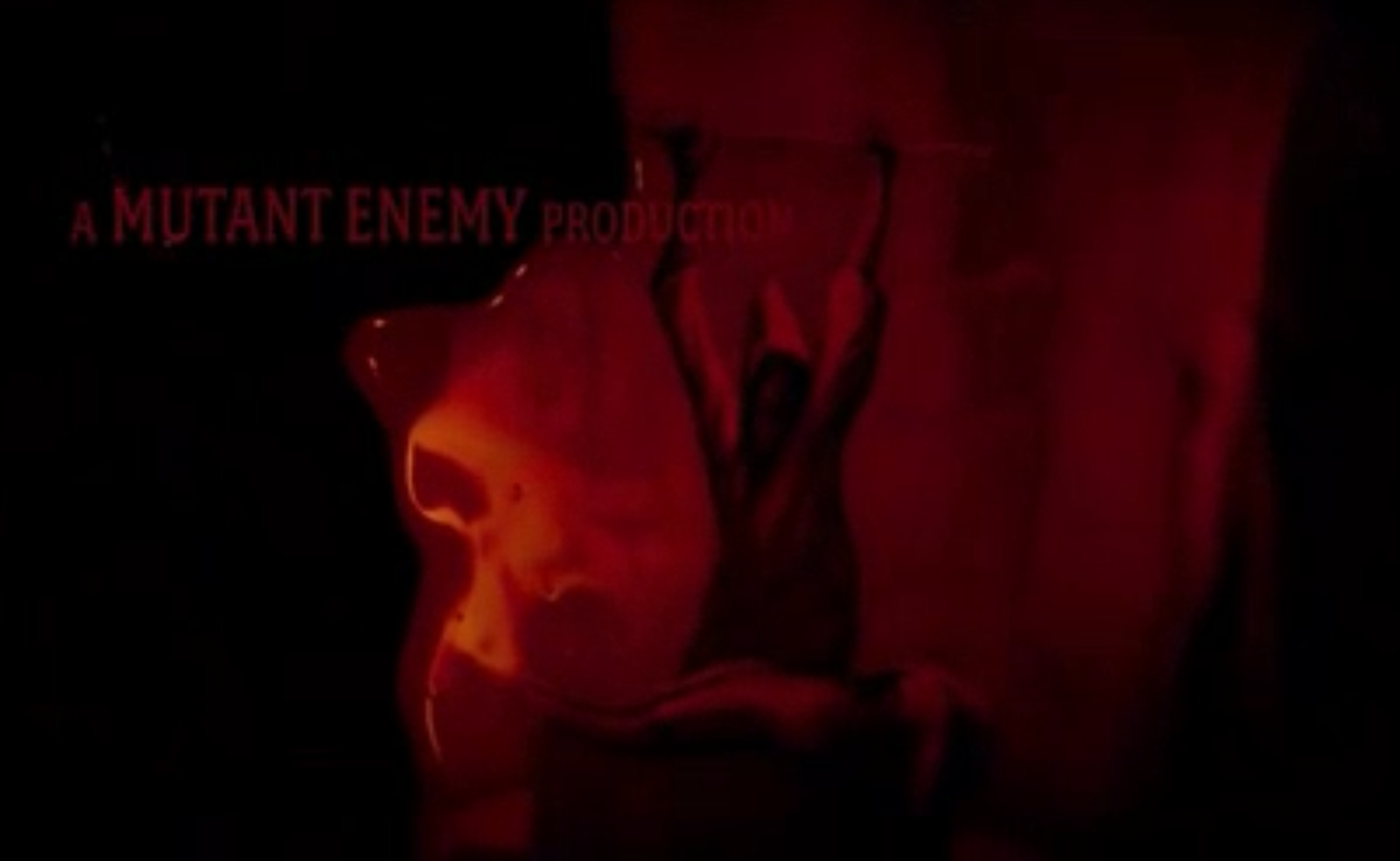
Production Companies: Lionsgate, Mutant Enemy
Budget (estimated): $30.000.000
Genre: Horror, Thriller, Mystery
Five teenagers head off for a weekend at a secluded cabin in the woods. They arrive to find that they are quite isolated with no means of communicating with the outside world. When the cellar door opens, they go down to investigate. They find an odd assortment of relics, but when one of the women, Dana, reads from a book, she awakens a family of deadly zombie killers.
The idents of this movie are "Lionsgate" and "Mutant Enemy". In most movies, the ident of "Lionsgate" is known for opening up doors where it's title then shows up on a background of a blue sky and clouds.
However in the case of this movie, there is a binary opposition, since this time the gates are not opened to heaven, but are opened to hell.
This change of the "Lionsgate" ident, already emphasises on the genre of the movie due to the color, but also the non-diegetic sound of old rusty metal when the doors open up.
After this, the screen goes black and there is blood everywhere, while the titles of the director, and the production companies show up.
When the two men who have been introduced to earlier drive around in a mini car, the man on the right talks about that he needs to pick up some things. In that very moment that he says that, there is a freeze frame and the title of the film "The Cabin in the Woods" is projected on screen. That same second, there is a non-diegetic sound of a scream.
It is written in capital letters and in a big red font. Again the color red is used. This color is known for several things such as blood, anger etc. The chosen font and the scream underline the horror genre of the movie.
The camera then changes from the freeze frame to an establishing shot, of a boy riding his skateboard in a neighborhood. It is sunny outside and everything seems very peaceful after the scream we had just heard.
There are only about 5 different titles of actors that show up on screen. Due to this, we can conclude that there is probably not any supporting cast in the film, since it is just about these 5 going to the cabin.
Furthermore, the font of the titles are written in red and in blood. Each time the names of the actors, producers etc. disappear of screen, they fade away and the blood runs down from the name.
The way that the media producer has chosen to make the red font drip down the screen as if it were blood helps the audience to identify the genre. In the opening sequence there are pictures shown in the blood. These pictures show old myths and rituals. This entire opening and it's font where used to convey meaning to the audience, since it was clearly portrayed to them, that the genre would be horror.
The overall effect of this red color is that it connotes the genre of the movie and indicates that blood will be spilt and the actor's we see on screen will most likely suffer.
Especially in this part of the film opening, the media producers may have wanted it to look like big pools of blood. In these, the audience can see pictures of hooded men, a women sitting etc. It looks a bit like pictures taken out of books from old myths.
Moreover, there is a very dark and mystical non-diegetic sound of a song playing in the background. This is added for effect, again to build up tension in the audience.
In addition, there is blood mixed with flames and what looks like lava. This again emphasises on the genre, since it is the typical signs an audience looks for in a horror movie. Especially blood.
All of a sudden, there is a binary opposite created, when the opening sequence ends out of the blue and a mid-shot of a coffee machine comes up on screen.
This binary opposition is very clear and straightforward to notice, since it goes from a dark and red image with a dark sound of drums in the background to a mid-shot of a happy feeling of a nice cup of coffee and no music at all in the background.
There is a conversation taking place between these two men for a while.
While they are having a conversation they walk around the place where we assume that they are working. This helps the audience to establish a setting. In addition, the mise-en-scene of the costumes could hint that they are working at either a hospital, a lab or something similar.
In the case for the symbolic signs in this movie, you could notice that the colour red was being used very often. On many occasions, the colour red signifies passion and love. However in this film, you can immediately notice that it signifies hell, anger and blood. The audience can notice this, due to the chosen non-diegetic music and other signs such as the blood and the fact that all the titles have been written in red.
In this opening sequence, we are introduced to two actors that we consider to be working in a lab or hospital. After this, the audience is introduced to the main actors in the movie. It is sunny outside and they are laughing together. This definitely suggests that Todorov's theory of the narrative formula has been implied since there is an equilibrium.
Since the task was to analyse the opening sequence and not the entire movie, it is difficult to say if the institution has created this movie with the entire conventional structure suggested by Todorov. However, we can state that in most horror movies it is often the case that this narrative structure is not being followed except for the first 2 steps.
Through the chosen structure of the opening sequence, with having the introduction in red and blood and then creating an equilibrium, the audience knows that something is about to happen and that there trip to the cabin probably wont work out the way they expect it to be.
Moving on to discuss the conventions of the horror genre, we can state that "The Cabin in the Woods" is a great example of the ususal scream queen/final girl.
In the film opening, we find out that the girl with the brown/reddish hair who is portrayed as smart with all of the books on economics that she has packed and the creative drawings, is the one that survives in the end, whereas the typical blonde is one of the people who is killed first. Her friend is pictured as the stereotypical dumb blonde, who does whatever she pleases, by throwing out a drawing.
Producers: Jason Blum Actors: Patrick Wilson, Rose Byrne, Ty Simpkins Writers: Leigh Whannell
Production Companies: Alliance Films, IM Global, Haunted Movies Budget: $1.500.000 (estimated)
Genre: Horror, Thriller, Drama, Mystery
Insidious is a movie from 2010 about a family in search of help for their son, Dalton, who fell into a coma after a mysterious incident in the attic. Little do they know that there is much more to this endless sleep than meets the eye as they explore the paranormal, and rediscover the past; they key to getting their son back once and for all.
The production companies for this movie are Alliance Films, IM Global and Haunted movies. When the ident of Alliance Films comes up, there is a non-diegetic sound of a high pitched tone in the background.
Next there is ablack screen coming up with all three identsspelled in a red font. They are shadowed in a reddish color and then fade upwards into a grey smoke and then each letter fades into black one by one until there is an entire black screen again.
The darkness and the blood like color that have been chosen are used to create the tension and establish the genre to the audience. Moreover, the font strongly links to the conventions of the horror genre as well.
During this entire process, there is a non-diegtic sound of scary music in the background. One can immediately tell that the music is meant to emphasise on the genre and create suspension since it is very high pitched and specific instruments have been chosen for this part.
When the name of the director, James Wan, appears it is seen within a white ball. In the beginning the audience would consider this to be an ordinary introduction of the director's name.
However, it turns out that the white ball is a lamp within a room hanging by the ceiling. The audience is immediately introduced to the first setting of a boy's room. We can notice this, due to the mise-en-scene of the bed-sheets and the small night table with toys on it next to his bed.
When the film title of the movie appears, it is very sudden and out of the blue. In addition, there is an immediate non-diegetic music of violins playing very fast and dramatically. This adds to the drama genre, since violins are very often being used in these type of films, since it is able to built up a tension within the audience.
The movie title's font is in red as well. The word 'Insidious' is written in capital letters while there is fire burning underneath it and the tips of each letter look like small horns. This could signify the devil and hell, which is definitely also contributing to the convention of the horror genre.
When the titles of the actors appear, there are shown on black and white pictures of the outside and inside of a house. The red color really stands out since it is such a strong color and a clear contrast compared to the black and white.
Again it is being projected the same way as the idents of the movie since this also fades into grey smoke.
Meanwhile, the non-diegetic music has changed completely since it is now very calm and barely hearable.
In this text, the dominant elements were the color choices, especially when there was the clear contrast with the red fond on the black and white background. This really made the audience focus on the red color and it's hint to the genre.
As in many horror movies, the color red is used as a symbol for blood, danger, flames and hell. However, in this movie, the red color fades into grey dust, which has a sort of 'ghostly' appearance over it, so it could definitely be interpreted this way.
Furthermore, the way that the media producers had chosen to light the boy's bedroom and the rest of the house as very dark and gloomy, already made the audience feel the scarifying tension. There was also a very smooth introduction to the opening on the film, when the director's name appeared in a white ball that then went over to being the lamp in the boy's bedroom. This was a very good transition and a good way of getting the audience attention, since something happened immediately.
In this case, there is an enigma code, since the darkness e.g. lighting, and the non-diegetic music in the film refer to mystery within the movie. Moreover, there is an action code, since the chosen way of letting the font fade into a grey color, that could be interpreted as a ghost, is used to create tension and suspense to the audience.
Below you can see a a discussion from James Wan, the director of Insidious who explains why he started with a horror genre, and what he thinks of it. He believes the horror genre to be the one that every good director he knows starts out with. He is also talking about the typical development of the character. He says that the role is to make the audience care for the main character before any of the tension starts, so that the audience get up into their seats once the actual tension starts.